What Is a Meter Collar? How Some Northern Michigan Homes Can Go Solar Without a Panel Upgrade
If you’ve ever gotten far enough into going solar to get a quote, only to be told your electrical panel needs upgrading first, you know how fast the math changes. A lot of homes across the Upper Peninsula and Northern Michigan, especially older farmhouses, camps, and homes built before the 1990s, still run on 100-amp or 150-amp electrical service. Those panels were never designed with solar, battery storage, or EV chargers in mind.
For years, the answer was simple and expensive: upgrade the panel, then go solar.
Now there’s another option worth putting on your radar. It’s called a meter collar (you’ll also hear it called a “meter socket adapter” or MSA), and it’s one of the more practical innovations to hit residential solar in a long time. Here’s what it is, how it works, and what it means for homeowners in our neck of the woods.
What Is a Meter Collar?
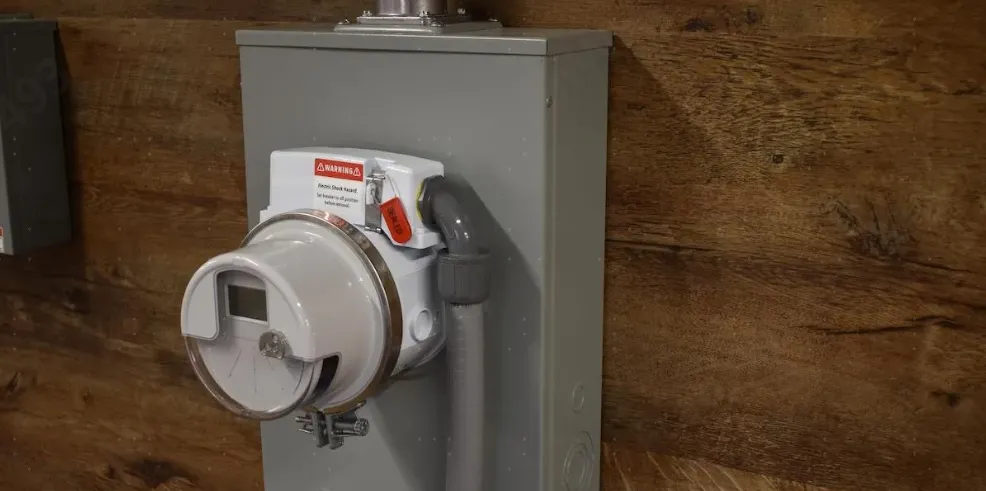
A meter collar is a compact device that installs between your electric meter and the meter socket. The round glass meter on the side of your house sits in a standardized socket, and the collar sandwiches in between the two.
Instead of routing your solar system’s wiring through your main electrical panel, the collar creates a dedicated, code-compliant connection point right at the meter. Your panels tie in at that spot on the outside of your house, with a built-in circuit breaker protecting the connection.
Think of your electrical panel like a full parking lot. Traditionally, adding solar meant finding a spot, and if the lot was full, expanding the lot. A meter collar adds a separate entrance that doesn’t touch the lot at all.
Why This Matters in the UP and Northern Michigan
Our service area has a lot of housing stock that makes traditional solar interconnection harder than it needs to be:
Older homes with 100-amp service. Plenty of homes in Marquette County, the Keweenaw, and across Northern Michigan still run on original or decades-old electrical service. Adding solar the conventional way often triggers a main panel upgrade. That means real electrical work, permits, inspections, and cost, all before a single panel goes on the roof.
Camps and seasonal properties. Remote properties often have minimal electrical infrastructure. A meter collar can simplify the connection without requiring a service rebuild.
Rusty, crowded, or non-compliant panels. Anyone who’s opened up a 40-year-old panel in a damp Michigan basement knows what can be waiting in there. A meter collar keeps the solar connection outside, at the meter, without disturbing aging equipment inside the home.
Winter logistics. Interior electrical work means more site visits, more scheduling, and more time in your home. An at-the-meter connection reduces the work inside your house, which matters when the install window is a snowy Tuesday in Negaunee.
How the Installation Works
The concept is straightforward:
- The utility meter is temporarily pulled from its socket
- The meter collar is seated into the socket
- The meter is reinstalled into the collar, extending a few inches off the wall
- The solar system’s output wiring connects to the collar’s junction point, protected by a dedicated breaker inside the device
Because everything happens at the meter, the installer typically doesn’t need to open your main panel, run new circuits through finished walls, or relocate anything inside your home. Installations are faster, cleaner, and involve fewer of the surprises that come with older electrical systems.
The Honest Part: Utility Approval Is Required
Here’s what a lot of articles about meter collars skip, and it’s the part that matters most for Northern Michigan homeowners.
Because a meter collar physically connects to utility-owned equipment (the meter itself), your electric utility has to approve the device before it can be installed. Approval isn’t statewide or automatic. It happens utility by utility, and it’s still rolling out across the country. Some utilities have embraced meter collars while others are still evaluating them. In some places, only utility personnel can install them.
Northern Michigan and the UP are served by a patchwork of providers, including investor-owned utilities, rural cooperatives, and municipal utilities, and each one handles meter collars differently. That’s not a reason to write off the technology. It’s a reason to work with an installer who knows the local utilities and will give you a straight answer about what’s possible at your address.
That’s how we approach it at Peninsula Solar. When we assess your property, we look at your panel capacity, your meter configuration, your utility, and your goals. If a meter collar is a viable path for your project, we’ll tell you. If a targeted panel upgrade genuinely makes more sense, and sometimes it does, especially if your panel needs replacing anyway, we’ll tell you that too.
Meter Collars and Battery Storage
Meter collars aren’t just a solar story. Newer versions of the technology can act as the disconnect point between your home and the grid, which is the piece of equipment that lets a battery system safely power your house during an outage.
Traditionally, whole-home battery backup required a critical loads subpanel or a gateway device, plus the labor to rewire circuits. Collar-based designs can eliminate much of that work, which makes backup power simpler to add. For homeowners at the end of a long rural line in the UP, where outages aren’t hypothetical, that’s a meaningful development, and one we’re watching closely as utility approvals expand.
If you want a deeper dive on backup power, read our article on battery backup vs. grid-tied solar.
Is a Meter Collar Right for Your Home?
A meter collar is worth asking about if:
- Your home has 100-amp or 125-amp electrical service
- You’ve been quoted a main panel upgrade as a prerequisite for solar
- Your panel is old, crowded, or hard to access
- You want to minimize electrical work inside your home
- You’re planning solar now with battery storage or an EV charger later
It’s less likely to be the answer if your panel needs replacement for safety reasons regardless of solar, or if your utility hasn’t approved at-the-meter installations yet. Even then, standalone configurations and conventional interconnection methods are always on the table.
The only way to know for sure is a site assessment. Every home, every panel, and every utility territory is a little different. That’s true everywhere, but it’s especially true up here.
Frequently Asked Questions
Does a meter collar affect my utility meter or billing? No. Your utility’s meter continues to measure your usage exactly as before. The collar simply creates a connection point beneath it.
Is a meter collar safe? Meter socket adapters are UL-listed devices with built-in circuit breakers. They’re installed to code by qualified professionals and go through the same permitting and inspection process as any solar interconnection in Michigan.
Will my utility allow it? It depends on your provider, and approvals are expanding. We’ll verify what your specific utility allows as part of your project assessment.
Does this replace the normal interconnection process? No. Every grid-tied solar system in Michigan still goes through the standard utility interconnection application and receives permission to operate before it’s energized. A meter collar changes how the system physically connects, not the approval process.
Can a meter collar work for my business or farm? Meter collars are primarily a residential solution designed for standard home meter sockets. Commercial and agricultural services are usually configured differently. But if you’re a business owner facing electrical service constraints, reach out. There’s almost always a path, and we’ve designed around plenty of them.
Talk to a Local Installer Who Knows Your Utility
Solar technology keeps getting more flexible, and meter collars are a good example: less disruption, less electrical work, and a path forward for homes that used to hit a wall at the panel. The catch is that availability depends entirely on your utility, which makes local knowledge the whole ballgame.
Peninsula Solar has been designing and installing solar and energy storage across Northern Michigan and the Upper Peninsula since 2011, with offices in Marquette and Traverse City. We know the housing stock, we know the utilities, and we’ll give you an honest read on the best way to connect your system, collar or not. Contact us with any questions you may have regarding system installation for your home or business.