Battery Backup vs. Grid-Tied Solar in Northern Michigan
If you’re new to solar, going through the different options for your project may feel like you’re being fully immersed in a different language. So let’s break down two options:
Battery backup is a system that captures the excess energy your solar panels produce during the day and stores it for later use.
How it works:
- Solar panels generate DC (direct current) electricity
- An inverter converts it to AC (alternating current)
- Your home uses it first
- Excess energy charges the battery
- When your panels don’t produce enough, your home will draw power from the battery
- When your battery is depleted, your home will pull from the grid
A grid-tied solar system is a photovoltaic setup directly connecting your solar panels to the regular electric grid. You’re not “off the grid,” you’re sharing it.
How it works:
- Solar panels generate DC (direct current) electricity
- An inverter converts it to AC (alternating current)
- Your home uses it first
- Excess energy goes to the grid
- When your panels don’t produce enough, the grid is there to cover the gaps
Living in Northern Michigan, we know the weather can be unpredictable and unforgiving at times, causing power outages lasting several days, especially in rural areas of the Upper Peninsula. In this article, we’ll help you figure out which solar system actually fits your Northern Michigan home and lifestyle, so you can make a confident decision before your first panel ever goes up.
Self-Consumption
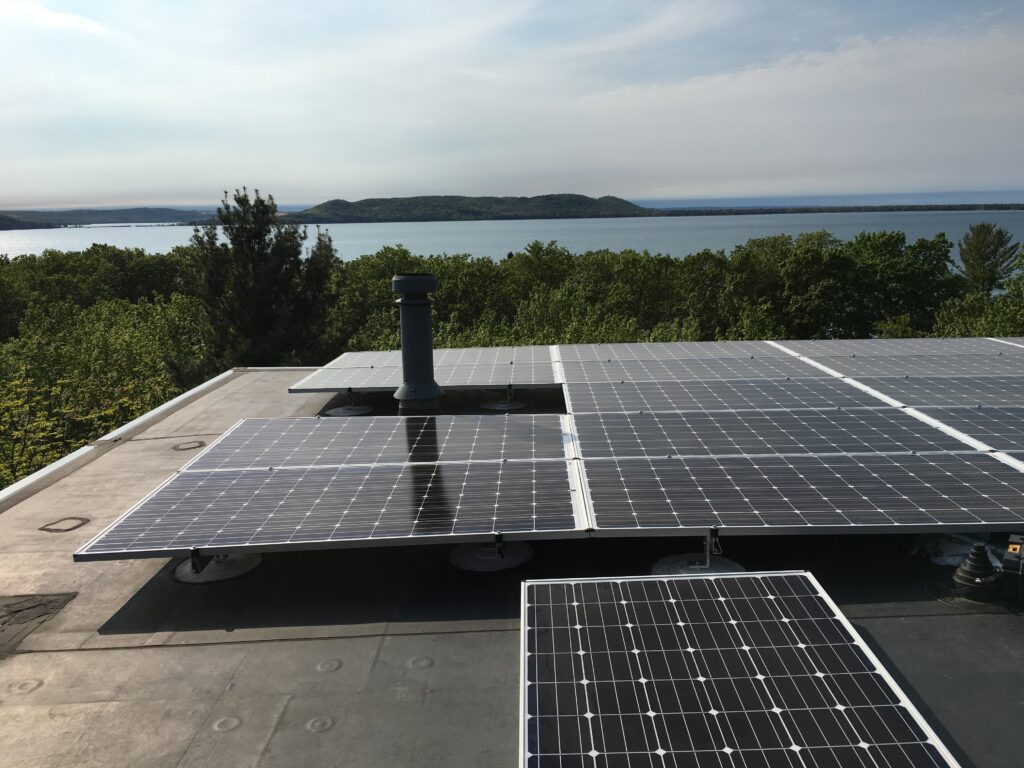
Self-consumption is simple: it’s the percentage of solar energy your home actually uses versus what gets sent back to the grid, and it matters more than most homeowners realize. In grid-tied systems, the energy you don’t use gets sent back to the grid via net metering, for which you can get a credit, but it’s rarely dollar-for-dollar. In a battery backup system, your unused energy stays in your home to charge the battery before it reaches the grid. The more of your own solar energy you keep in your home, the less you buy back from DTE or Consumers Energy at full retail price, and that’s where the real savings start to add up.
Your panels in Northern Michigan produce the most energy on long, sunny summer days, often between 10 am and 2 pm when the majority of Michigan homeowners are at work or away from home. In a grid-tied system, the excess solar energy leaves your home directly after it’s been produced. A solar battery stores the surplus energy and holds it until you actually need it: evenings, cloudy days in November, or a grey stretch in January when there’s a drop in production.
Understanding your solar self-consumption rate is the first step in determining which system actually works harder for your Northern Michigan home.
Time of Use
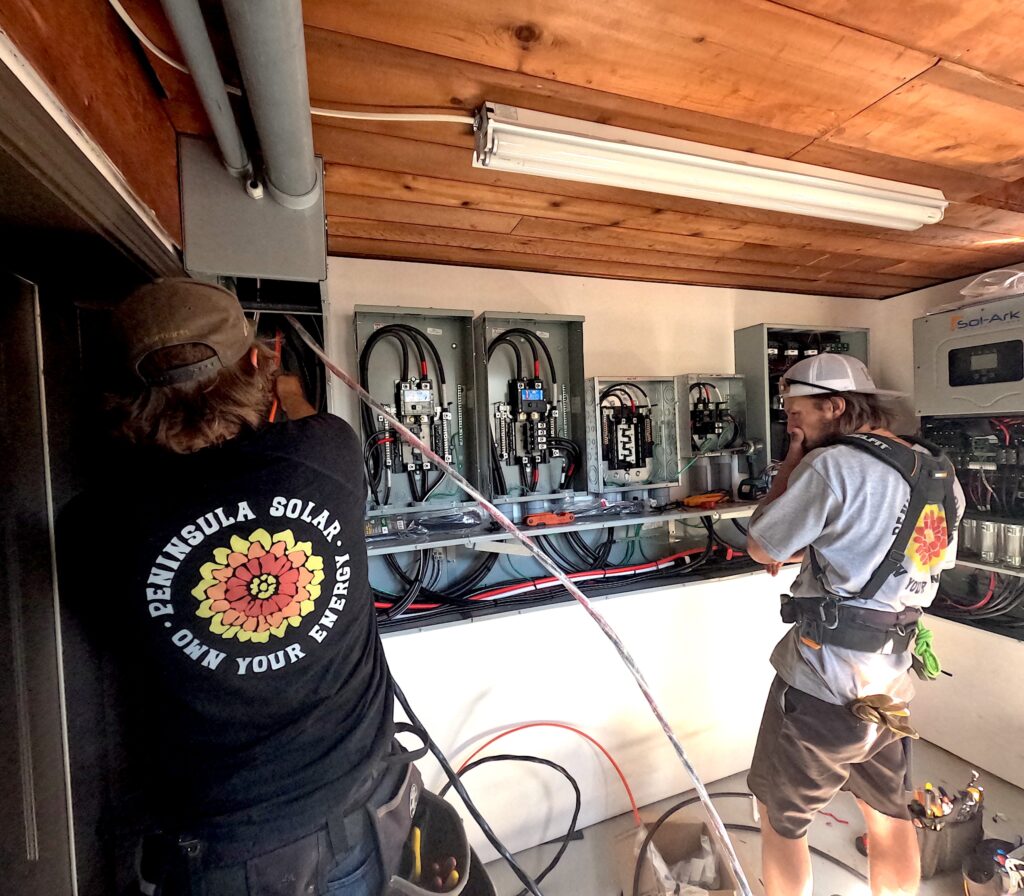
Many homeowners think their electricity bill is one flat rate; unfortunately, that is not the case. Time-of-Use (TOU) pricing is an electricity billing structure that allows for rates to fluctuate based on the time of day, season, and demand. Both DTE and Consumers offer TOU rate plans, meaning the electricity you pull from the grid at 6 pm on a Tuesday costs more than what you use at noon. Peak energy rates in Michigan typically hit between 3 pm and 7 pm, right when most families get home, turn on the lights, and start cooking dinner. That’s also exactly when solar production starts winding down for the day. Not as much daylight = less immediate solar energy. With solar battery storage, you don’t need to tap into the grid during peak hours; you use your own stored energy reserves and avoid paying premium prices. For grid-tied homeowners, shifting energy-intensive tasks like laundry and dishwashing to midday can still help reduce your bill. But without a battery, you have limited control over what happens after the sun goes down.
Michigan winters can be brutal, with heavy snow and significantly shorter daylight hours when compared to the rest of the country. In December, your panels may stop producing around 3-4 pm. Right when everyone’s getting home, the after-school snacks are out, dinner needs to be made, and the laundry pile isn’t going to wash itself. It just so happens to be that at that time of the day, the peak rates kick in. Meanwhile, homeowners in Arizona still have daylight until 6 pm. Understanding when you use energy and what it costs at that hour is the second piece of the puzzle in choosing the right solar system for your Northern Michigan home.
Prioritization
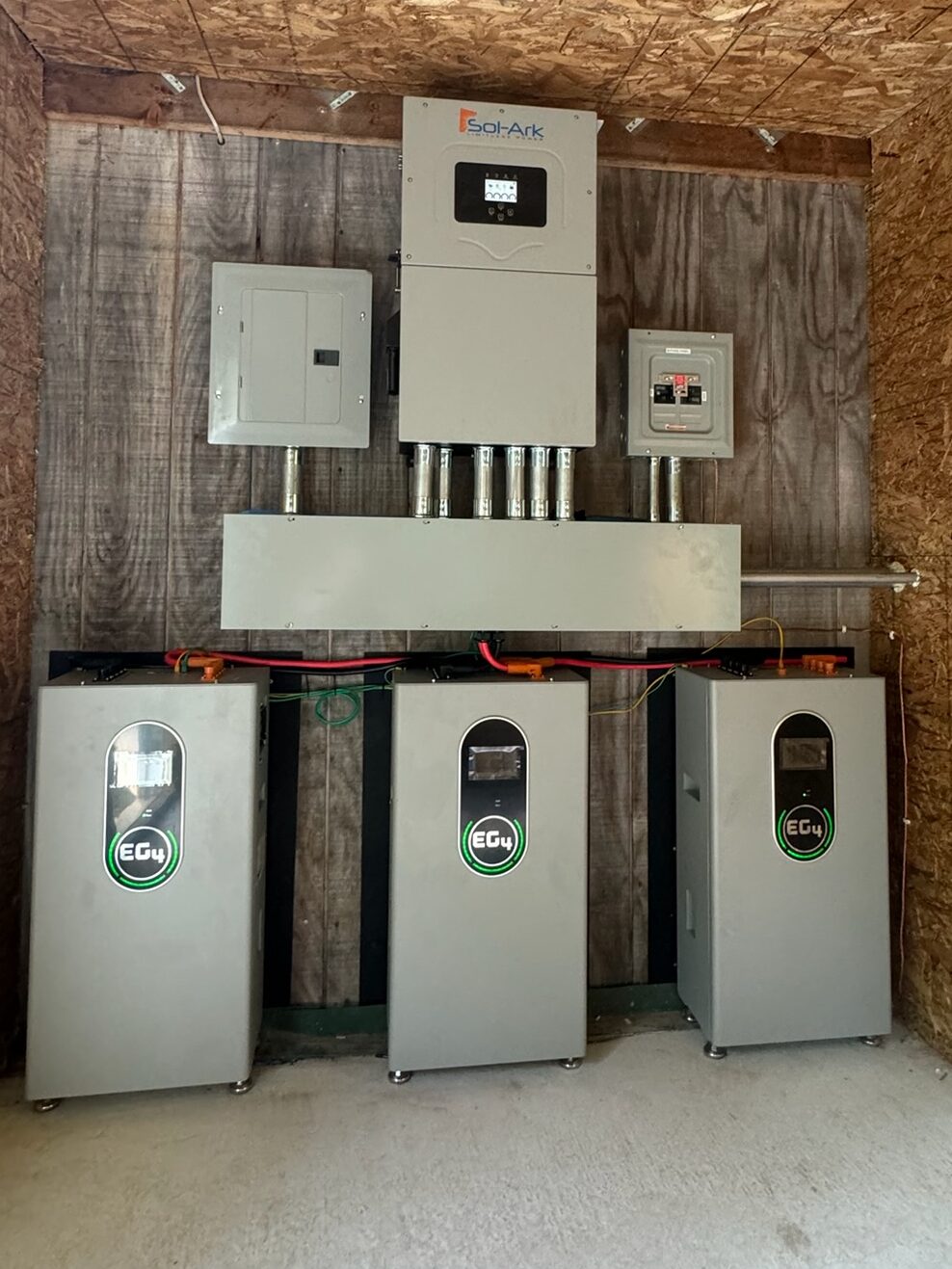
Not all energy is created equal, and neither is how your home uses it. Prioritization is how a battery system decides where your solar energy goes and in what order. In a battery system, the typical priority order is: power the home first, charge the battery second, and send excess solar energy to the grid third. Essential appliances and systems in your home that require continuous power — well pumps, medical equipment, heating systems, refrigerators and freezers — fall under the category of critical loads, especially critical in rural Northern Michigan, where a failed well pump means no running water.
Most battery systems Peninsula Solar installs, including Tesla Powerwall, Enphase, and Sol-Ark, allow homeowners to customize their prioritization settings through a mobile app. With the customization feature, homeowners can adjust their solar battery prioritization seasonally, for example, switching to prioritize backup power heading into Michigan’s winter storm season.
For grid-tied homeowners, the grid is your backup power; you don’t have to worry about your battery being charged. The grid is always there as an unlimited backup source as long as it’s running.
However, there is one thing most grid-tied homeowners don’t know going in that catches almost everyone off guard. When the grid goes down, a grid-tied solar system automatically shuts off, even if your panels are producing energy at full capacity. This is called anti-islanding protection. Anti-islanding is a required safety feature that protects utility workers by preventing them from being electrocuted due to electricity feeding back into the utility lines while workers are repairing them. This is a smart and needed safety measure, but it does mean that during a Northern Michigan ice storm or multi-day outage, a grid-tied system won’t power your home, even on a sunny day.
A battery backup is designed for exactly this scenario. When the grid goes down, your system disconnects and switches to backup mode, keeping your critical loads running independently until power is restored. For homeowners in Traverse City or Petoskey with reliable grid access and no well pump or medical equipment to worry about, grid-tied is a smart, cost-effective choice. For rural UP homeowners who have lived through a five-day outage, battery backup starts to make a lot of sense.
Backup Power
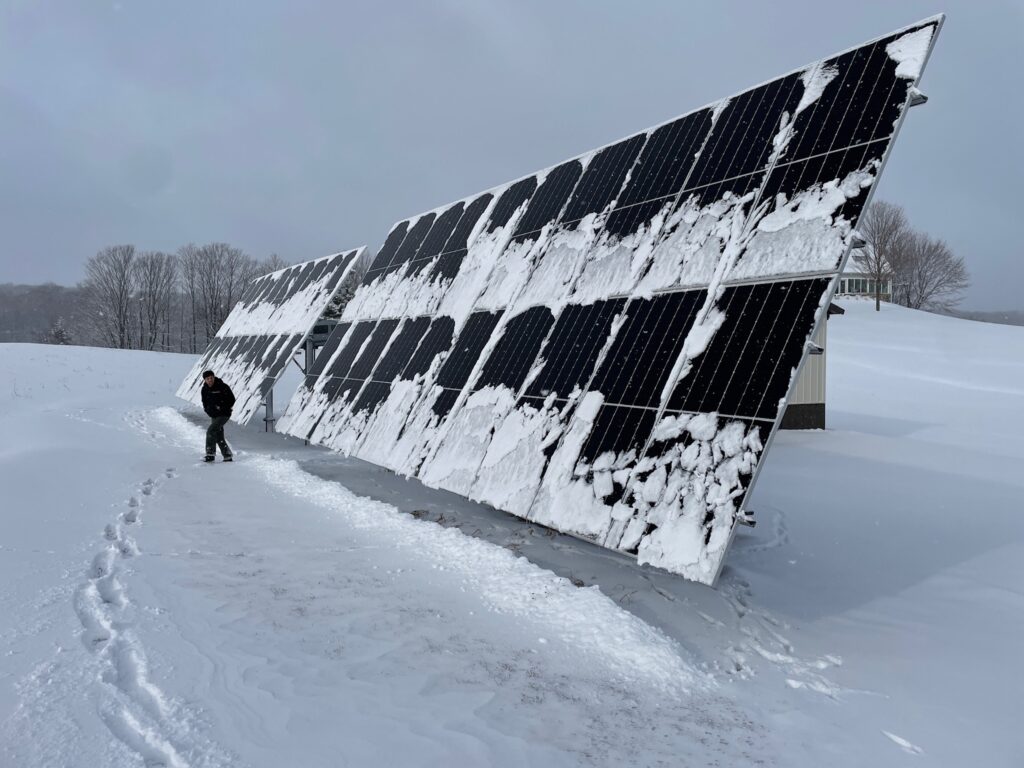
A grid-tied system shuts off the moment the grid goes down, no exceptions. A battery backup system does the opposite; it disconnects from the grid and automatically switches to backup mode, powering your home from stored energy reserves. Power outages in Northern Michigan and the Upper Peninsula aren’t a matter of if; they’re a matter of when. So what actually happens to your home when the grid goes down? The national average outage lasts around 5.5 hours. Rural Northern Michigan residents often experience multi-day outages lasting 3 to 5 days or more following severe weather. When the grid goes down for days at a time, your critical loads are at risk. The lights go out, and your devices go dead. Your fridge and freezer begin to thaw, taking your venison and fish with them. The heat stops working, the well pump shuts off, and you can’t get a good night’s sleep because your CPAP has nowhere to plug in. This is where your lifestyle, your property, and your priorities start to shape which system is the right fit for your Northern Michigan home.
When it comes to battery backup, there are two configurations to consider: whole-home backup and partial backup, sometimes called a critical loads panel. Whole-home backup powers every circuit in your house simultaneously: your lights, appliances, well pump, heat, and everything in between. It’s the closest thing to not knowing the power went out at all. Partial backup powers only your most essential circuits, your well pump, refrigerator, a few lights, and medical equipment. It’s less expensive than whole-home backup, and for most Northern Michigan homeowners, it covers everything that actually matters during a 3 to 5-day outage. It’s not all-or-nothing; it’s about matching the system to what your household actually needs to function.
For homeowners in reliable grid areas with infrequent outages, grid-tied solar is a genuinely smart, cost-effective choice. A grid-tied system is significantly less expensive upfront than any battery backup configuration, and as long as the grid is running, every circuit in your home is covered. The honest question worth asking yourself is: how often does your power go out, and for how long?
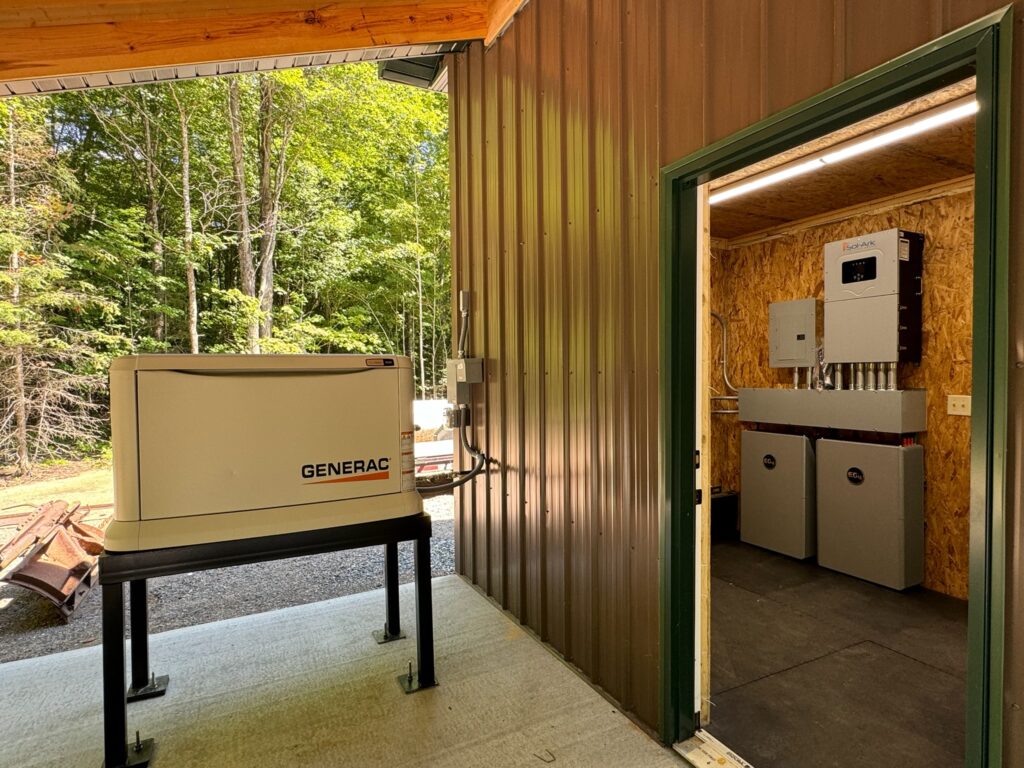
If you’re weighing battery backup against a generator, you’re not alone. It’s one of the most common comparisons we hear from Northern Michigan homeowners. Generators are familiar, reliable, and get the job done. But they come with a list of trade-offs worth thinking about. They run on fuel, and during a major outage, fuel runs out or becomes impossible to find. They require maintenance, oil changes, winterization, and storage. They’re loud. And they produce carbon monoxide, meaning they can never run inside your home or garage. A solar battery backup system is silent, requires no fuel, produces no emissions, and recharges itself every day the sun shines. During a 5-day Northern Michigan outage, your battery is topping itself back up every morning while your neighbor is making their third trip to find a gas can.
Every Northern Michigan home is different, and the right solar system for your neighbor may not be the right one for you. That’s exactly what a free quote from Peninsula Solar is designed to determine.
FAQs
Does battery backup work during a Michigan winter? Yes — and it works better than most people expect. Cold weather actually improves solar panel efficiency, meaning your panels are producing energy even on crisp January days. Your battery charges from that daily production and holds the energy until you need it. The main variable in winter is shorter daylight hours, which is why battery sizing matters — a properly sized system accounts for Michigan’s seasonal production patterns so you’re not left short on a grey February week.
How long can a solar battery power my home during a Northern Michigan outage? It depends on two things: the size of your battery bank and what you’re running. A single Tesla Powerwall holds around 13.5 kWh of usable energy. The average Michigan home uses roughly 30 kWh per day — so one Powerwall alone won’t power everything indefinitely. That’s why most Northern Michigan homeowners opt for either multiple batteries or a partial backup setup that prioritizes critical loads like the well pump, refrigerator, and medical equipment. With a properly sized system and solar panels recharging your battery daily, you can get through a multi-day outage comfortably.
Is grid-tied solar worth it in Northern Michigan? Absolutely, for the right homeowner. If you’re in a reliable grid area like Traverse City or Petoskey, rarely experience multi-day outages, and your primary goal is reducing your monthly energy bill, grid-tied solar delivers strong ROI at a lower upfront cost than battery backup. The key is knowing your property, your outage history, and what you’re willing to go without if the power goes out.
What is anti-islanding protection and why does it matter? Anti-islanding protection is a required safety feature built into every grid-tied solar system. When the utility grid goes down, your system automatically shuts off, even if your panels are producing energy at full capacity. This prevents electricity from feeding back into utility lines while workers are repairing them, protecting linemen from electrocution. It’s a smart and necessary safety measure, but it does mean that a grid-tied system provides zero backup power during an outage. If backup power is important to you, battery backup is the answer.
What’s the difference between whole-home backup and partial backup? Whole-home backup powers every circuit in your house simultaneously: lights, appliances, well pump, heat, everything. It’s the most seamless experience during an outage but requires a larger battery bank and higher upfront investment. Partial backup, sometimes called a critical loads panel, powers only your most essential circuits, typically your well pump, refrigerator, a few lights, and medical equipment. For most Northern Michigan homeowners, partial backup covers everything that actually matters during a 3 to 5-day outage at a significantly lower cost. Peninsula Solar can help you figure out which configuration fits your home and budget.
How much does a battery backup system cost in Northern Michigan? The cost varies based on battery size, configuration, and the complexity of your installation. A single battery like a Tesla Powerwall or FranklinWH typically starts around $10,000-$15,000 installed. Whole-home backup with multiple batteries will run higher. The good news is that financing options like Michigan Saves and PACE financing can make battery backup accessible with little to no upfront cost. The best way to get an accurate number for your specific home is a free quote from Peninsula Solar, we’ll design a system around your actual needs and budget.
Can I add battery backup to my existing grid-tied solar system? In most cases, yes. Many existing grid-tied systems can be retrofitted with battery storage depending on your current inverter and equipment. Peninsula Solar can assess your existing system and recommend the most cost-effective path to adding backup power without replacing everything you already have. Give us a call at 906-235-0340 or request a free quote at peninsula-solar.com.
Conclusion
At this point, we’ve broken down the core differences between two primary solar paths: battery backup and grid-tied setups. A grid-tied system is a genuinely smart, cost-effective choice for Northern Michigan homeowners located in reliable grid areas who rarely face outages. This configuration is ideal if your main objective is reducing your monthly utility bills, you don’t have critical loads like well pumps or medical equipment to protect, and you’re looking for the most efficient path to a full return on your investment. On the other hand, solar battery backup is designed for rural homeowners in the UP or Northern Michigan who can’t risk a multi-day blackout. If you need absolute energy independence, total control over your power prioritization, and a way to shield your home from premium utility rates even after the sun goes down, a battery system starts to make a lot of sense.
If you’re looking for more information on battery backup solar or grid-tied solar installations in Northern Michigan, request a free quote on our website, peninsula-solar.com, send an email to sales@peninsula-solar.com, or give us a call at 906-235-0340
It’s time to own your energy☀️